
By Sydney McCarter
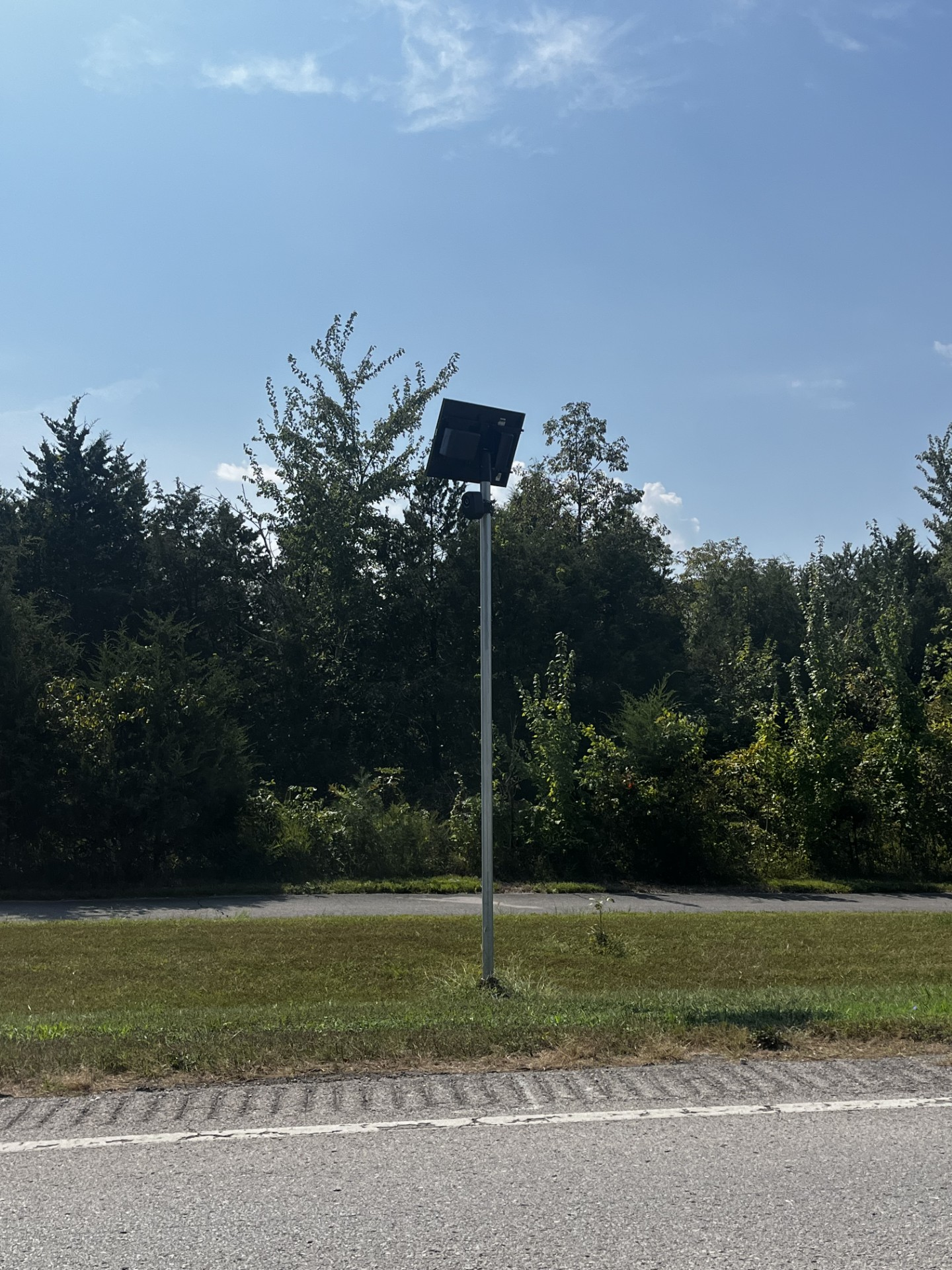
Flock cameras are a product of Flock Safety, which sells surveillance equipment for the purpose of “detect[ing] threats and captur[ing] actionable evidence with solar powered devices,” through the cameras themselves, license plate readers, mobile security trailers, drones, and monitoring software. The Flock camera license plate readers (LPR), utilize a combination of motion sensors and Artificial Intelligence to gather information on vehicles, no matter their condition, and provide data to law enforcement officials in their investigations. LPRs capture the time and location of the detected motion, along with the vehicle’s make, model, plate, and color in the span of that vehicle passing by a flock camera.
When combined with the software platforms advertised by the company, these systems are capable of scanning flock networks for specific vehicles and particular individuals and retain this information for a period of 7 days without access (previously 30), though the company asserts that the cameras do not utilize facial recognition. Flock cameras can be owned by police stations, businesses, and Homeowners Associations, though the former two can share their footage with law enforcement officials, which can distribute this information on both the state and national level, creating complex searchable networks across both.
Within the state of Kentucky, there are a total of 1,910 reported Flock cameras. Nine of these Flock cameras are located around the city of Berea. As seen in the graphic below, it would be virtually impossible to enter or exit the city without passing and thus being detected by one of these Flock cameras. Of course, in cases of police investigation and public safety these cameras can be beneficial, but the question remains: when does security become surveillance, and have we already crossed this line?

Critics of Flock would argue that we have, and that what we are seeing is a move towards mass government surveillance that surpasses its surface level goal of “detecting threats” and “capturing actionable evidence,” and instead violates the privacy of every day citizens going about their lives. Flock may have the potential to be used in a fashion that aids police investigations, but it can also store vast amounts of data on those not involved in criminal activity whatsoever.
Regardless of concerns of how Flock functions when it is doing what it was designed to do, valid concerns of what misuse of these cameras can mean when the wrong person gets access to the data stored by the cameras is also a topic of great controversy. For example, a police officer within the state of Kentucky is facing criminal charges for allegedly using the departments Flock camera system to track his ex-partner over 2,000 times. Similar offenses have been reported in Ohio, Indiana, Florida, and Wisconsin. As of September 11th, 22 police and sheriff’s officials have faced legal or employment consequences for Flock misuse. These cameras have also been used to target immigrant communities without the consent of local governments or warrants, track women making personal medical decisions, and even to target individuals critical of police department practices.
While the debate over Flock’s ethical use and boundaries may be flooding national headlines, there are still steps that can be taken right here in Berea to ensure that our privacy and data remain protected. After intense community pushback, Flock camera LPRs are now banned in Knox County, Tennessee. The American Civil Liberties Union (ACLU) recommends the following steps to apply a similar pressure in other communities across the country.
1. The ACLU has drafted its own legislation for states that wish to ban or restrict the use of Flock camera LPRs. Contact local and congressional representatives to ask them to consider this legislation to regulate the use of Flock. The ACLU even provides an email template on their website here.
2. Join a local movement against the use of Flock. The ACLU provides a map of state affiliates on their campaign page Get the Flock Out! Those acting outside of known movements can attend and protest local city council meetings to voice their concerns. City council meetings are held in Berea on the first and third Tuesday of each month at 6:30pm at the City Annex, 304 Chestnut Street.
3. Information is power. Inform friends and family of the dangers of Flock, whether it be through social media or everyday conversations.
Additionally, those interested in getting involved in the fight against Flock are welcome to join the Berea College Political Science Association on October the 20th, at 6:30pm at the Berea City council to voice their concerns publicly to the individuals representing us at the local level.